

He crossed the finish line first. The trackside announcer declared him the winner. His team erupted. And then in one of the most stunning reversals in motorsport history they took it away from him.
Did Ken Miles win Le Mans? It is a question that has haunted racing fans for sixty years, fuelled a Hollywood film, and sparked a debate that shows absolutely no sign of dying. The short answer is: officially, no. The longer answer the real one is far more complicated, far more heartbreaking, and far more fascinating than any official result can capture.
In June 1966, Ken Miles drove one of the most dominant races in Le Mans history. He was faster, further ahead, and more in control than any other driver on that circuit. He had already won Daytona and Sebring that same year. A Le Mans victory would have made him the only driver in history to win all three great endurance races in a single season. It was within reach. And then Ford’s own management took it from him. did ken miles win le mans.
This is the full story. And honestly, it is the kind of story that motor racing rarely tells honestly.
Quick Bio
| Detail | Info |
|---|---|
| Full Name | Kenneth Henry Jarvis Miles |
| Born | November 1, 1918 – Sutton Coldfield, England |
| Died | August 17, 1966 – Riverside, California, USA |
| Nationality | British-American |
| Profession | Racing Driver, Automotive Engineer, Test Driver |
| Famous For | 1966 Le Mans controversy; Ford GT40 development; Ford v Ferrari |
| 1966 Season | Won Daytona 24 Hours, Won Sebring 12 Hours, Official 2nd at Le Mans |
| Le Mans Official Result | 2nd Place (1966) |
| Employer | Shelby American / Ford Motor Company |
| Driving Partner (Le Mans ’66) | Denny Hulme |
| Spouse | Mollie Miles |
| Children | Peter Miles (born 1950) |
| Height | 6 feet 1 inch |
| Hall of Fame | Motorsports Hall of Fame of America |
| Portrayed by | Christian Bale in Ford v Ferrari (2019) |
Who Was Ken Miles?
Before the controversy, before the film, before the heartbreak Ken Miles was simply one of the most gifted racing driver-engineers the sport had ever produced. And for most of his career, he received almost none of the credit he deserved for it.
Kenneth Henry Jarvis Miles was an English sports car racing engineer and driver best known for his motorsport career in the U.S. and with American teams on the international scene. He is an inductee to the Motorsports Hall of Fame of America. did ken miles win le mans.
That biography undersells him, as biographies of engineers often do. Ken Miles was not just a driver. He was the person who made the Ford GT40 actually work. He spent years in the heat of California testing tracks, pushing prototypes to their limits, feeding information back to engineers, refining setups that nobody else could feel. As an automotive engineer, he is known for developing, along with driver and designer Carroll Shelby, the Ford GT40 the car that won the 24 Hours of Le Mans in 1966, 1967, 1968, and 1969.
Four consecutive Le Mans victories. Ken Miles built the car that won all of them. He drove it in 1966. And officially, he did not win.
That detail matters more than people initially realize.
Early Life From Birmingham to the Racetrack
Ken Miles was not born into racing. He was born into a very different world.
Miles was born on 1 November 1918 in Sutton Coldfield, then in Warwickshire, now in the city of Birmingham. He left school at the age of 15 to work as an apprentice at Wolseley Motors, who sent him to a technical school to broaden his knowledge of vehicle construction. did ken miles win le mans.
That apprenticeship planted something in him a mechanical instinct, a feel for how machines behaved under stress, that would later make him irreplaceable in the development of one of the most complex racing cars ever built. He started on motorcycles. Miles began riding a 350cc Trials Special Triumph bike as a young man, crashing and coming back, as racing people always do.
Then the war arrived. Miles served in the British Army during World War II, eventually participating in the D-Day landings in 1944, serving in a tank unit. Seven years of military service shaped a man who was already mechanically minded into someone with an almost unnatural understanding of how machines behave under extreme pressure. That experience translated directly to what he did on a racetrack. did ken miles win le mans.
After the war, he moved to California in the early 1950s, where he began racing seriously. He started with MG Specials, moved to Porsche Spyders for racing enthusiast Otto Zipper, then raced Cobras for Carroll Shelby and went on to join the Ford factory team that developed the GT40.
The path from Birmingham apprentice to Le Mans competitor took roughly thirty years. But every single step of it was preparation.
The Road to Le Mans 1966 Season
To understand what Ken Miles lost at Le Mans in 1966, you have to understand what he had already won that year.
Miles won the 24 Hours of Daytona, sharing the Ford GT Mk II with Lloyd Ruby. That was February. A dominant victory. Ford swept the podium. The Ferrari response was that their factory was not entered a face-saving position that became harder to maintain as the season progressed. did ken miles win le mans.
Then came Sebring in March. Miles and Ruby were the winners again, triumphing in the Ford GT-X1 at Sebring 12 Hours. They crossed the finish line twelve laps ahead of the competition. Twelve laps. In a 12-hour race. That is not a close win that is a statement.
By the time the Le Mans entry list was being drawn up, Ken Miles had won two of the three great endurance races. Daytona. Sebring. All that remained was La Sarthe.
This was a terrible disappointment for Ken Miles who expected the triple crown of Daytona-Sebring-Le Mans as a reward for his investment in the GT40 development. And for a while a glorious, painful, brief while it looked like he was going to get it.
Success does not arrive politely in motorsport. It arrives screaming at 200 miles per hour. And at Le Mans 1966, Ken Miles was screaming louder than anyone. did ken miles win le mans.
Did Ken Miles Win Le Mans? The Official Answer
Quick Answer For Featured Snippet:
No. Officially, Ken Miles did not win the 1966 24 Hours of Le Mans. The race was officially awarded to Bruce McLaren and Chris Amon, driving the #2 Ford GT40 Mk II. Ken Miles and co-driver Denny Hulme finished second in the official results, despite leading the race and crossing the finish line in what appeared to be a dead heat.
That is the result that stands in the record books. It is also, by almost every credible account from people who were there, deeply unjust.
What Actually Happened at the Finish Line
Here is where the story stops being simple.
In the final hours of the race, the car of Ken Miles and Denny Hulme was leading dominantly yet obediently slowed in order to achieve a formation finish. Ford management, specifically racing director Leo Beebe, made the decision. Three Ford GT40s were going to cross the finish line together a publicity photograph, a message to Ferrari, a corporate statement dressed up as a sporting moment.
With three Ford GT40s in the lead, it was clear Ford was going to win the race. Ken Miles and Denny Hulme carried first place. Bruce McLaren and Chris Amon were in second place, and Ronnie Bucknum and Dick Hutcherson were twelve laps behind in third. At that moment, Shelby instructed the two leading cars to slow down so the third car could catch up. did ken miles win le mans.
Miles obeyed. He slowed. He waited. He followed his orders.
Miles thought he had won as did the PA commentator but it was the #2 car that was classified first, after whispers of conspiracy and sabotage.
The ACO the Automobile Club de l’Ouest, Le Mans’ governing body had a rule. In the event of a tied finish, the car that had started further back on the grid would be deemed the winner, because it had technically covered more ground. The #2 McLaren/Amon car started behind the #1 Miles/Hulme car. Car #1 started in P2, with car #2 in fourth, exactly 14.28 meters behind. Add the six-meter difference at the flag, and it was #2 that had covered the greatest distance in 24 hours and was declared the winner.
Ken Miles stood on the podium in second place. The trackside announcer had already declared him the winner. His mechanics had already celebrated. And then the result came through.
That is where everything changed. did ken miles win le mans.
The Formation Finish Order Who Decided It
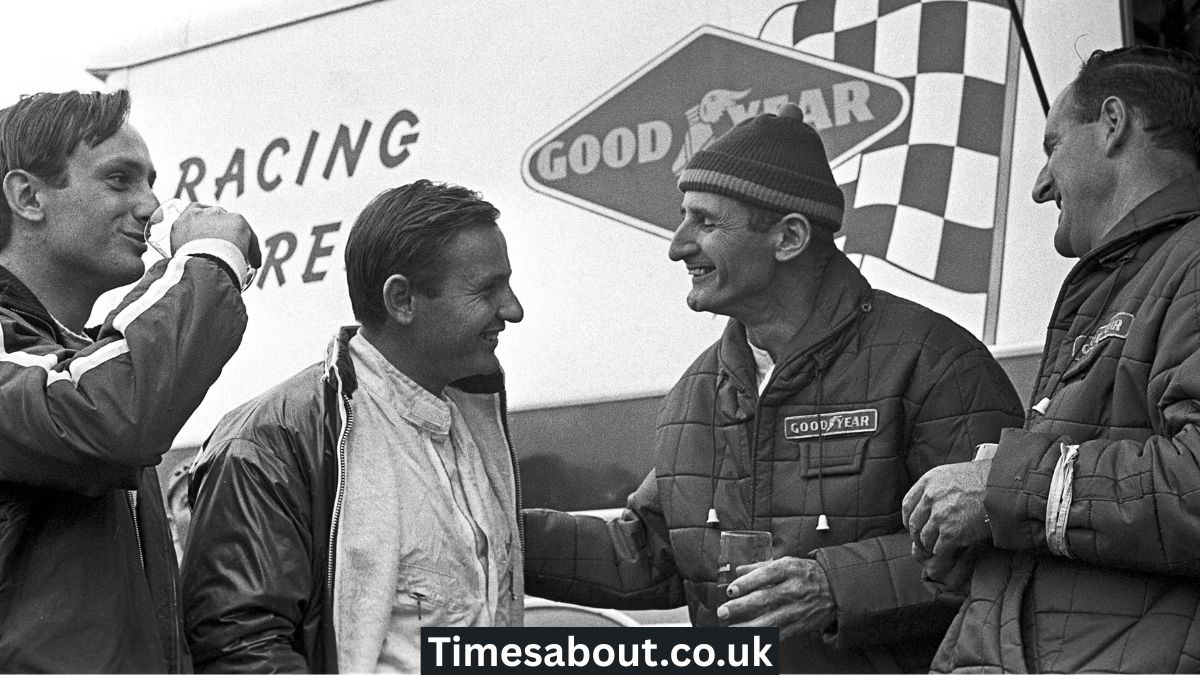
This is the detail that shifts the story from sporting misfortune to something considerably more troubling.
Leo Beebe, a good company man, operated by that rule. Like hundreds of factory team managers in the history of the sport, Beebe elected to make a call as to which of his cars was going to win. For various reasons, he chose McLaren and Amon.
You might wonder: if the formation finish was going to happen regardless, why wasn’t Miles’ car placed in the winning position? He was leading. He had been faster. He had built the car. He had already won Daytona and Sebring that year and was on the cusp of an unrepeatable achievement.
Ford management had instructed the drivers of all three cars to finish together, with the image of a flamboyant Ford win being excellent publicity. As the first two cars were racing in the same lap, that meant engineering a tie for the finish. But nobody crucially told Miles or his team about the ACO’s tiebreaker rule regarding starting positions. They were told it would be a dead heat. Both cars would be declared winners.
What no one was told was that the ACO changed their mind and notified Ford officials that there could be no dead heat. did ken miles win le mans.
So Ford knew. The ACO knew. And Ken Miles, slowing on the back straight on the final lap to let McLaren pull alongside him for the photograph, did not know.
He did exactly what he was told, and at the end, he slowed down on the back chute and all over the place to let McLaren unlap himself. He followed his orders and then he got f***ed. That’s what happened.
Those are the words of Charlie Agapiou, Miles’ chief mechanic. Unvarnished. Accurate.
The Lap Lead Controversy Was Miles Really Ahead?
The official explanation is that McLaren’s car was awarded the win based on starting position distance. But there is another dimension to this controversy that makes it even thornier.
Scorers and mechanics in his paddock report that he was one full lap ahead by the final hour of the race. Not seconds ahead. Not meters ahead. A full lap.
Ford’s efforts to secure a dead-heat photo finish at Le Mans in 1966 cost Ken Miles victory from a four-lap lead. Motor Sport Magazine’s reporting suggests the lead was even greater than the official lap-by-lap data shows that suspicious pit stop timing and questionable brake changes may have artificially compressed what was a commanding advantage.
Ken was close to four laps ahead of McLaren. So there was no way he could have just slowed down for four laps. It would have looked stupid with the bloody press. I don’t know what went on, but he lost a ton of time with those two stops. did ken miles win le mans.
The brake disc change standard procedure during a long race may have cost him laps. Whether that was coincidence or something more deliberate has never been definitively established.
What is established: Ken Miles was told to slow down. He slowed down. He lost the race. And the people who told him to slow down knew, or should have known, that slowing down would cost him the victory.
Think about it like this. A driver who has spent years developing a car. Who won the two races before this one. Who is leading by what multiple witnesses describe as a full lap or more. Who is on the verge of an unrepeatable triple crown. And he is told by his own employer to slow down. He obeys. He loses.
That is not a sporting misfortune. That is a betrayal. did ken miles win le mans.
Carroll Shelby’s Verdict Ken Miles Won the Race
For years, the official Ford position was that the result was correct, the rules were applied properly, and McLaren deserved the win.
Then, in 1997, Carroll Shelby spoke.
In a 1997 interview, Shelby lamented the ACO made up rule and stated that indeed Ken Miles won the race and expressed feelings of guilt about what had occurred.
Carroll Shelby the man who ran the whole operation, who was there at pit lane, who gave the orders spent the last thirty years of his life carrying the weight of what happened to Ken Miles at Le Mans. He called it a made up rule. He said Ken Miles won the race.
They were under the impression that Miles had won the race, but McLaren was indeed declared the 1966 Le Mans winner.
And Bruce McLaren himself? Chris Amon and Bruce McLaren, who were classified first, were strangely subdued on the podium. They knew. Everyone in the Ford camp knew. The only people who didn’t know were the ones watching from outside the garage, reading the official results and assuming sport had been played fairly. did ken miles win le mans.
Ken Miles’ Death Two Months Later
The Le Mans result was the last race of Ken Miles’ career. Not because he retired. Because he died.
On August 18, 1966, Miles died testing a J-Car at Californian circuit Riverside. His Ford flew off a high bank at 200mph and rolled over multiple times, throwing the driver out of the car on its third revolution and bursting into flames. did ken miles win le mans.
There was nothing to indicate anything wrong as the car came down the backstretch at about 175 mph. Then, toward the end of the straight when the car had slowed to approximately 100, it went out of control, spun to the inside of the course and went over a tall embankment. The car bounded end over end and Ken, thrown out of the car, was dead of head injuries before emergency crews reached the scene.
He was 47 years old. He had won Daytona. He had won Sebring. He had led Le Mans for most of a 24-hour race. He had built the car that would go on to win the next three consecutive Le Mans races.
It was a bitter irony that two months later Ken Miles was killed testing a prototype of the ultimate designed-and-made-in-USA Ford racecar. did ken miles win le mans.
Peter was almost 16 when he witnessed his father’s death in the prototype J-car crash in 1966.
More than 400 people attended his funeral, including Carroll Shelby and former teammates. The sport he had served the same sport that had just denied him its greatest prize gathered to say goodbye to a man it had treated with stunning ingratitude.
Life was not fair during those years. And the sport was not fair either.
Ford v Ferrari How the Film Told the Story
For most people alive in 2026, the name Ken Miles entered public consciousness through a single source: the 2019 film Ford v Ferrari, released as Le Mans ’66 in parts of Europe.
Directed by James Mangold, starring Matt Damon and Christian Bale in the roles of Carroll Shelby and Ken Miles respectively, the film was released on 15 November 2019. At the 92nd Academy Awards, the film received four nominations including Best Picture and Best Sound Mixing, and won for Best Sound Editing and Best Film Editing.
Christian Bale’s portrayal of Miles is considered one of the finest performances of his career a man of brilliant mechanical instinct, profound emotional depth, and absolutely zero patience for corporate politics. The film captures the essence of what happened at Le Mans with reasonable historical accuracy, including the formation finish decision and Miles’ stunned reaction to losing.
Friedman tells us that when Miles was told of the orchestrated finish, he disgustedly said: So ends my contribution to this motor race. did ken miles win le mans.
That line did not make it into the film. But it defines the man. After years of building the car, testing the car, developing every system that made it competitive he reduced his contribution to this motor race in one sentence. The bitterness was real. The resignation was real. And then he went back to work, because that was who he was.
Legacy and Historical Perception
Officially, Ken Miles placed second at Le Mans in 1966. Historically, the picture is very different.
There was a campaign in America in the 1990s to get the 1966 Le Mans results changed to formally recognize Miles as the winner. It did not succeed. The ACO’s rules were applied correctly on the day, even if the circumstances surrounding the finish were morally complicated.
Miles is an inductee to the Motorsports Hall of Fame of America. The car he developed won four consecutive Le Mans races between 1966 and 1969. His influence on American motorsport as a driver, as an engineer, as a developer of some of the most important racing cars of the 1960s is simply incalculable.
And yet for most of his career, he was the other guy. The test driver. The engineer who drove. The Englishman in America who never quite got his moment. He was sometimes called the Stirling Moss of the West Coast. High praise. Privately given. Never quite matching the public recognition he deserved.
The truth is, racing history is full of people like Ken Miles. People whose contributions live in the victories of others. But few cases are as clear-cut, as documented, or as heartbreaking as his. did ken miles win le mans.
Why This Question Still Trends in 2026
Did Ken Miles win Le Mans is not a question that fades. Sixty years after the race, it remains one of the most searched topics in motorsport history. Why?
Partly it is the film. Ford v Ferrari introduced Miles to a generation that had never heard of him, and Christian Bale’s portrayal was specific enough hurt enough, real enough that viewers came away wanting to know what actually happened.
Partly it is the injustice. Human beings respond to injustice. When a story contains a protagonist who does everything right and still loses because of someone else’s decision, audiences cannot let it go. They search. They read. They argue. They want the record corrected even when the record cannot legally be changed. did ken miles win le mans.
Partly it is the tragedy of what came next. Two months. That is all the time between Le Mans and Riverside. Two months between the race he should have won and the testing session that killed him. There is no resolution in that timeline. No second chance. No redemption arc. Just a brilliant man, doing the job he loved, dying in service of the same car and the same company that had just denied him the greatest achievement of his career.
And partly honestly it is because the question deserves to be asked. History should know what happened. The record may say McLaren won. The evidence says something different.
Interesting Facts About Ken Miles
- He rode motorcycles from the age of 11, crashed at high speed, broke his nose, lost three teeth, and kept going. That says everything about who he was.
- He participated in the D-Day landings in 1944, serving in a British tank unit a military record as impressive as his racing one.
- He became the chief test driver of Shelby American in 1963 and held that role until his death, making him indispensable to two of the most iconic racing programs in American motorsport history.
- He won the 1961 US Road Racing Championship a title that receives almost no attention compared to his later work, but which demonstrates how consistently excellent he was across decades of competition.
- Ken Miles was way ahead of the race. He would have been the only man in history to win Daytona, Sebring and Le Mans. He should have won it. Those words belong to Charlie Agapiou, his chief mechanic. They have never been disputed by anyone who was present. Motor Sport Magazine
- The Ford GT40 Mk IV that won Le Mans in 1967 the successor to the car Miles drove was directly influenced by the testing data he generated in the months before his death.
- In 2019, Peter Miles said that the last time he went to Le Mans was in 1965 with his father Ken, and he has not returned since. His son has not been back. That quiet fact carries more weight than any official result.
Conclusion
Ken Miles did not officially win the 1966 24 Hours of Le Mans. That answer is technically correct, legally defensible, and morally bankrupt. did ken miles win le mans.
What he did was lead the race, build the car that made the result possible, execute a perfect 24-hour drive, follow orders that cost him victory, and walk away from the podium in second place having done absolutely nothing wrong. Two months later, he was dead. The car he spent his life developing went on to win Le Mans three more times without him.
For any reader wondering whether the sport ultimately delivered justice it didn’t. Not in Ken Miles’ lifetime. But history, which moves slowly and sometimes gets things right eventually, has delivered a different verdict. Ask any serious motorsport historian who won Le Mans in 1966. Ask Carroll Shelby, who said clearly in 1997 that Ken Miles won the race. Ask Charlie Agapiou, who watched it happen from pit lane. did ken miles win le mans.
Ken Miles is proof that the most important contributions are sometimes never properly credited. And honestly, sixty years later, the story is still not over because we are still talking about it, still searching for his name, still wanting the record to reflect what actually happened on that June day in France. did ken miles win le mans.
The record says second. History says first. And somewhere between those two truths, the full story of Ken Miles lives.
Frequently Asked Questions
1. Did Ken Miles win the 1966 Le Mans?
Officially, no. Ken Miles finished second in the 1966 24 Hours of Le Mans. Bruce McLaren and Chris Amon were declared winners. However, Miles led the race and was denied victory through a combination of Ford management’s formation finish order and an ACO tiebreaker rule based on starting positions.
2. Why was Ken Miles not declared the Le Mans winner?
When the three Fords crossed the finish line together, the ACO applied a tiebreaker rule: the car that started further back had technically covered more distance. McLaren’s #2 car started behind Miles’ #1 car, so it was declared the winner. Miles was never told this rule would apply when he agreed to the formation finish.
3. Did Ken Miles deserve to win Le Mans in 1966?
By all accounts from people present, yes. Multiple witnesses including Carroll Shelby stated Miles was a full lap or more ahead before being ordered to slow down. Shelby himself said in 1997 that Ken Miles won the race. Miles followed Ford’s instructions and lost the victory as a direct result.
4. What was Ken Miles trying to achieve at Le Mans 1966?
Ken Miles had already won the Daytona 24 Hours and the Sebring 12 Hours in 1966. A Le Mans victory would have made him the only driver in history to win all three major endurance races in a single season a Triple Crown that has never been achieved to this day.
5. How did Ken Miles die?
Ken Miles died on August 17, 1966 two months after Le Mans while testing Ford’s J-Car prototype at Riverside International Raceway in California. The car went out of control at high speed, went over an embankment, and Miles was thrown from the vehicle. He died of head injuries. He was 47 years old.
6. What did Carroll Shelby say about Ken Miles and Le Mans?
In a 1997 interview, Carroll Shelby called the ACO tiebreaker rule a made up rule and stated directly that Ken Miles won the race. He expressed guilt about what had happened. Shelby was the team manager present at the race and is perhaps the most credible voice on what actually occurred.
7. Who played Ken Miles in the movie Ford v Ferrari?
Christian Bale portrayed Ken Miles in the 2019 film Ford v Ferrari (released as Le Mans ’66 in some regions). The film starred Matt Damon as Carroll Shelby and won two Academy Awards: Best Sound Editing and Best Film Editing.
8. What was Ken Miles’ contribution to the Ford GT40?
Ken Miles was the primary test driver and development engineer for the Ford GT40 through Shelby American. He is widely credited with identifying and fixing the aerodynamic and mechanical issues that made the car uncompetitive early in its life. The GT40 won Le Mans in 1966, 1967, 1968, and 1969 all built on the foundation Miles helped create.
9. Has anyone ever won the endurance Triple Crown in a single year?
No. Ken Miles came closest in 1966 winning Daytona and Sebring before the Le Mans controversy. No driver has won all three major endurance races (Daytona 24 Hours, Sebring 12 Hours, Le Mans 24 Hours) in a single season.
10. Is the 1966 Le Mans result still controversial in 2026?
Yes. Sixty years after the race, the 1966 Le Mans finish remains one of the most debated results in motorsport history. The ACO result has never been officially changed, but Carroll Shelby’s 1997 statement, combined with eyewitness accounts and Motor Sport Magazine’s investigative reporting, ensures the controversy remains very much alive in racing culture.