
The world of seafood is filled with fascinating terms and occasional confusion. One phrase that has sparked questions among fishing enthusiasts and food lovers alike is flying fish roe. Some people wonder if this refers to a specific type of roe. Others question whether the phrase describes a method of harvesting or perhaps a myth about fish eggs. The truth is that flying fish roe is not a standard term in fisheries or culinary circles.
However, the confusion around this phrase highlights a larger issue. Many people do not fully understand what fish roe is. They may not know where it comes from or how it is legally harvested. There are also serious ethical questions about whether some fishermen kill fish only for their roe and then discard the rest of the fish. This practice, sometimes called roe poaching or wasting fish for roe, raises important legal and environmental concerns.
This article will clear up every confusion about fish roe. You will learn the true definition of roe. You will understand the difference between hard roe and soft roe. You will discover why the phrase flying fish roe is misleading. Most importantly, you will learn about the legal and ethical rules that govern roe harvesting. By the end of this guide, you will be able to confidently discuss fish roe without falling for common myths or misconceptions.
What is Fish Roe? A Clear Definition
Fish roe is the fully ripe internal egg mass found in the ovaries of female fish . In simple terms, roe is the eggs of a fish before they are fertilized. When these eggs are harvested, prepared, and served as food, they are called roe. The term applies to eggs from many different species of fish and even some marine animals like shrimp, scallops, and sea urchins .
It is important to understand that all caviar is roe, but not all roe is caviar . True caviar comes exclusively from sturgeon fish belonging to the Acipenseridae family. Salmon roe, trout roe, capelin roe, and flying fish roe are not technically caviar, though many people informally call them red caviar or other names.
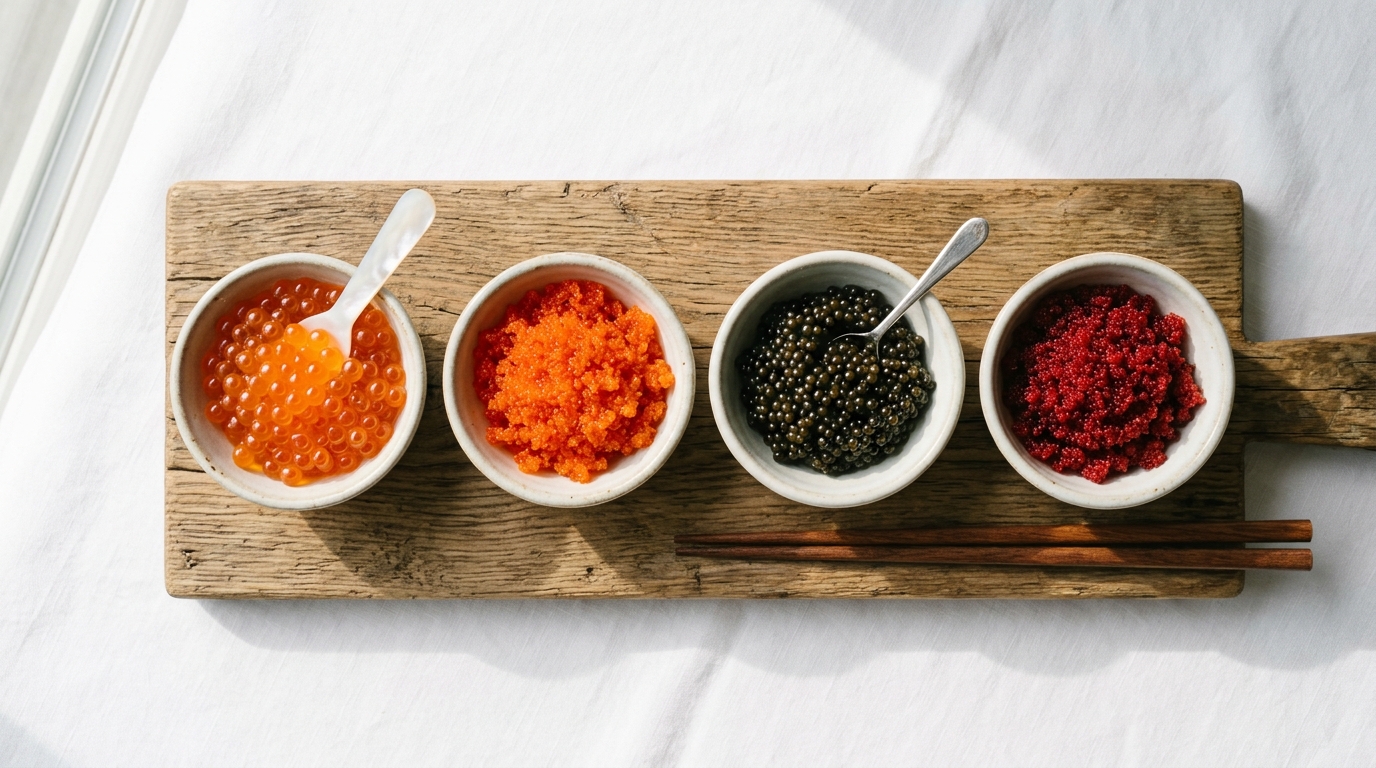
The color, size, and texture of fish roe vary greatly depending on the species. Salmon roe features large orange pearls that pop when bitten. Flying fish roe, known as tobiko, has tiny crunchy beads measuring only 0.5 to 0.8 millimeters in diameter . Some roe is bright red, some is black, and some is golden. These differences come from the natural pigments in the fish’s diet or from added food coloring in processed products.
Fish roe is highly nutritious. It contains significant amounts of protein, omega-3 fatty acids, vitamin B12, and selenium. This nutritional density is one reason why roe has been valued as a food source for centuries across many cultures .
The Origin of the Term Roe
The word roe has a long and interesting history. It comes from the Old English term hrā, which means roe or eggs . This word has connections to other Germanic languages. The Old Norse word hrogn and the German word Rogen both refer to fish eggs. The presence of this word across multiple languages suggests that ancient people in these cultures had a long tradition of consuming and valuing fish eggs.
So why do we say roe instead of just calling them fish eggs? The answer lies in culinary tradition. Roe is the specific term used when fish eggs are prepared or served as food . Using the word roe signals that you are talking about a food product, not just eggs in a biological sense. This distinction is important because not all fish eggs are safe or pleasant to eat. Roe implies a selection process, a method of preparation, and a culinary presentation.
The word spawn is another term related to fish eggs. Spawn can refer to both the act of fish laying eggs and the eggs themselves . For example, you might say the salmon are spawning to describe the reproduction process. Or you might say the river was full of salmon spawn to describe the mass of eggs deposited in the water.
The phrase flying fish roe does not appear in any standard dictionary or fisheries glossary. There is no scientific or culinary definition for this term. It appears to be a misunderstanding or a mishearing of another phrase. Some people might confuse it with the legal term John Doe or Richard Roe, which are fictitious names used for anonymous parties in lawsuits . But in the context of fish eggs, flying fish roe has no real meaning.
Hard Roe vs Soft Roe: Understanding the Difference
Fish roe is generally divided into two main categories: hard roe and soft roe. Understanding this distinction is essential for anyone who wants to buy, cook, or discuss roe knowledgeably.
Hard Roe
Hard roe comes from female fish . It consists of the fully developed eggs inside the fish’s ovaries. This is the type of roe that most people imagine when they hear the word. Hard roe is typically orange, red, yellow, or black. The eggs are usually separate from each other and have a firm, distinct texture.
Examples of hard roe include salmon roe (ikura), flying fish roe (tobiko), capelin roe (masago), and sturgeon caviar. Hard roe is often cured with salt or soy sauce to enhance flavor and extend shelf life. When you eat sushi topped with bright orange pearls, you are eating hard roe.
Soft Roe
Soft roe is completely different. It does not come from female fish at all. Soft roe consists of the sperm or semen of male fish . It is also known as white roe or milt. Soft roe lies along the body cavity of male fish and can be lifted out as a soft, milky white mass.
Soft roe is popular in certain cuisines, particularly in Europe and Japan. In the southern United States and Europe, soft roe often comes from tuna. In northern regions, herring soft roe is common. Soft roe can be air dried and sliced very thinly, then served with olive oil. It can also be dipped in flour and fried until golden brown. The texture of soft roe is creamy and delicate, completely different from the firm pop of hard roe.
The existence of soft roe sometimes confuses people who hear the phrase flying fish roe. But again, there is no connection between soft roe and the term flying fish roe. Soft roe is a legitimate, well documented food product with no deception involved.
Is fLying Fish Roe a Real Thing? Debunking the Myth
After extensive research across fisheries glossaries, culinary dictionaries, and scientific publications, there is no evidence that flying fish roe is a real term. The phrase does not appear in any authoritative source. It is not used by fisheries managers, seafood wholesalers, sushi chefs, or marine biologists.
So where did this phrase come from? There are several possibilities.
One possibility is that flying fish roe is a misunderstanding of the phrase lying in roe. Female fish carry their roe inside their bodies until they are ready to spawn. A fish could be described as lying in roe, meaning she is full of eggs. Over time, this descriptive phrase might have been shortened or misheard as flying fish roe.
Another possibility is confusion with the legal term Roe as in Richard Roe or Jane Roe. These are fictitious names used for anonymous parties in lawsuits . In legal contexts, a John Roe or Richard Roe might be described as a lying witness or a lying plaintiff. But this has nothing to do with fish eggs.
A third possibility is that flying fish roe refers to deceptive labeling practices in the seafood industry. Some companies sell lower quality roe and label it as a more expensive variety. This is a form of lying about roe, not a type of roe called flying fish roe.
The bottom line is clear. If you see a product labeled flying fish roe, it is either a mistake, a joke, or a scam. No legitimate seafood supplier offers a product by this name. The correct term is simply fish roe, followed by the specific species such as salmon roe, trout roe, or flying fish roe.
The Legal Reality: Roe Harvesting and Regulations
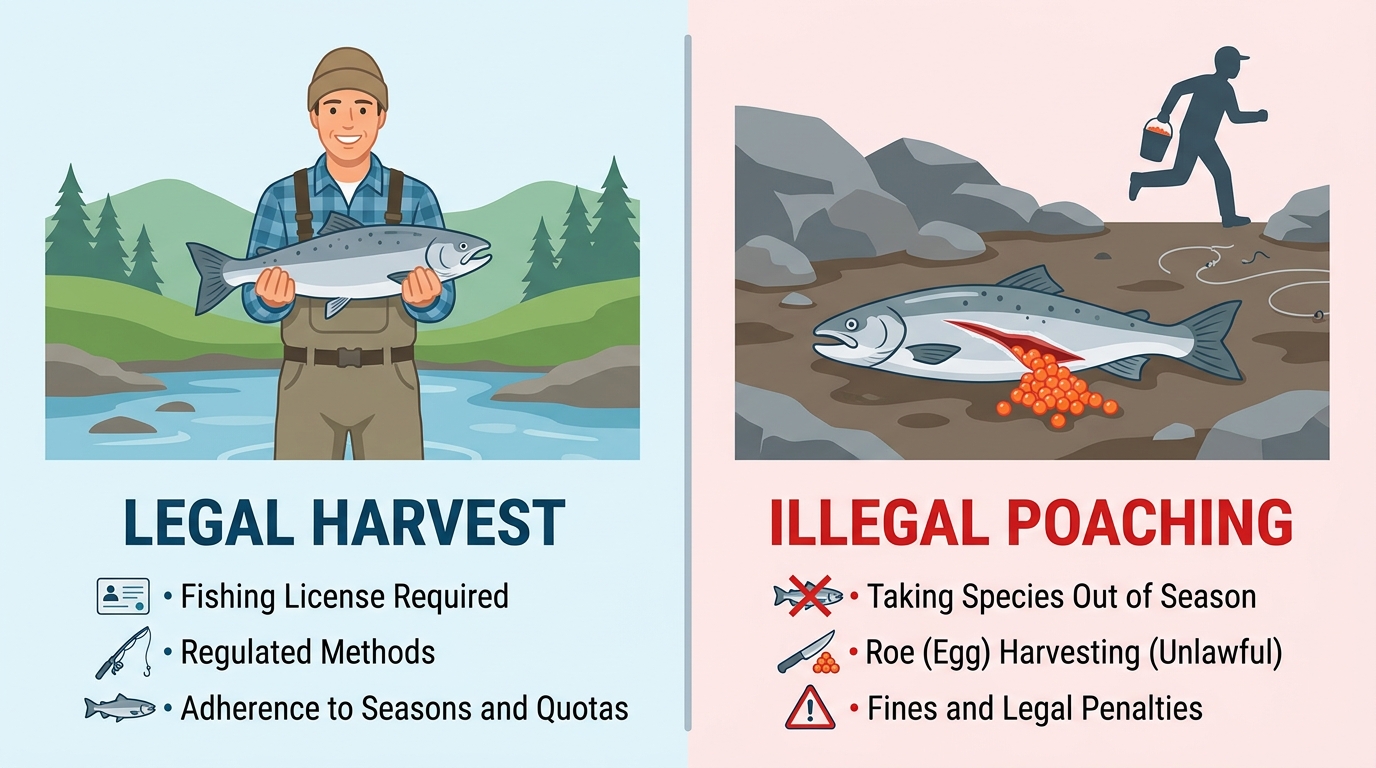
While flying fish roe is not a real term, there are very real laws about how roe can be harvested and possessed. These laws exist to prevent waste and protect fish populations.
In many regions, it is illegal to kill a fish only for its roe and then discard the rest of the fish. For example, fishing regulations in British Columbia explicitly state that you must not carry roe separated from the fish it came from, unless it is store bought with an invoice to prove it was legally sold to you . Even then, you can carry no more than one kilogram of roe at a time.
The regulation further explains that you cannot have more than one kilogram of roe in your possession for use as bait unless the roe was obtained from a commercial source that lawfully obtained that roe . If you want to possess more than one kilogram, you must have in your possession the freshly dressed fish from which the roe was taken. This rule prevents fishermen from taking only the eggs and wasting the rest of the animal.
Violating these regulations is considered a serious offense. Fishermen who kill female salmon only for their roe and leave the carcass to rot on the riverbed are breaking the law. This practice, sometimes called roe poaching, harms fish populations and disrespects the resource.
So while flying fish roe may not be a real term, lying about how you obtained your roe is definitely illegal. Fishermen who claim they caught a fish legally but then waste the meat are not being honest.
Ethical Concerns in Roe Collection
Beyond legal requirements, there are serious ethical questions about roe harvesting. Many anglers and conservationists have observed female salmon lying dead on riverbeds with their bellies slit open. The roe has been removed, but the rest of the fish is left to waste . This practice is both illegal and unethical.
Some fishermen argue that hatchery fish can be killed for roe without harming wild populations. They claim that removing hatchery fish helps maintain the genetics of wild salmon by reducing domesticated genes in the spawning population . However, even this argument has limits. Killing a fish just for its roe and discarding the meat is still wasteful. The ethical approach is to use the entire fish. If you take a fish for roe, you should also eat the meat or at least use it for another purpose such as cooking for pets.
Responsible anglers who take fish for roe have a clear rule. If the fish is not good for their own table, it gets cooked for their dog . Nothing goes to waste. The carcass is not left on the riverbed to rot. This approach respects the animal and the environment.
Consumers can also make ethical choices. When buying fish roe, look for products from sustainable sources. Ask your fishmonger where the roe came from and how the fish were handled. Choose suppliers who prioritize whole fish utilization rather than roe only harvesting. These small choices add up to meaningful change.
Common Misconceptions About Fish Eggs
There are several widespread misconceptions about fish eggs that deserve clarification.
Misconception One: All fish eggs are called caviar. This is false. Caviar comes only from sturgeon. Salmon eggs, trout eggs, and flying fish eggs are properly called roe.
Misconception Two: Fish roe is always expensive. This is not true. While caviar is expensive, many types of roe are quite affordable. Capelin roe, bowfin roe, and some salmon roe products are reasonably priced for everyday consumption .
Misconception Three: All fish reproduce by laying eggs. This is false. Some fish are livebearers. Guppies, mollies, and swordtails give birth to live young. These fish do not produce roe in the traditional sense .
Misconception Four: Roe must be cooked before eating. Most roe can be eaten raw or lightly cured. Sushi toppings like ikura and tobiko are served raw. Some roe products are pasteurized for longer shelf life, but fresh raw roe is perfectly safe and delicious when handled properly.
Misconception Five: The color of roe indicates the species. Not always. Flying fish roe is naturally yellow, but it is often dyed red, black, green, or gold for visual appeal in sushi . The color does not always tell you which fish the roe came from.
Roe in Culinary Traditions Worldwide
Fish roe appears in cuisines around the world. Each culture has its own methods of preparing and serving these eggs.
In Japan, ikura or salmon roe is a standard sushi topping. It is often served as gunkan maki, a battleship roll where the roe sits on top of rice wrapped with nori seaweed. Tobiko or flying fish roe is also very popular. The tiny crunchy beads add texture and visual appeal to many sushi dishes.
In Russia and Eastern Europe, red caviar or salmon roe is a traditional delicacy. It is often served on buttered bread or blinis with sour cream. Black caviar from sturgeon is considered the ultimate luxury.
In Scandinavia, roe from cod and lumpfish is common. It is often pressed into blocks and sliced, or served as a spread on bread. In Greece, taramasalata is a spread made from cured cod roe mixed with olive oil, lemon juice, and bread or potatoes.
In North America, fish roe has become more popular in recent years. It appears on sushi menus, in high end restaurants, and increasingly in home kitchens. The growing awareness of roe’s nutritional benefits and culinary versatility is driving this trend .
Conclusion
The phrase flying fish roe does not refer to any real type of fish egg. It is not a term used by fisheries scientists, chefs, or seafood sellers. After thorough research, no credible source defines or describes flying fish roe as a legitimate product.
However, the confusion around this phrase has led us to important truths about fish roe. We have learned that roe is the culinary term for fully ripe fish eggs. We have distinguished between hard roe from females and soft roe from males. We have explored the legal and ethical rules that govern roe harvesting. We have debunked common myths and misconceptions.
The real issue behind flying fish roe is the problem of deception in the seafood industry and unethical harvesting practices. Some fishermen lie about how they obtained their roe. Some suppliers lie about what species their roe comes from. Some consumers are lied to by misleading labels. These are the real lies that matter.
When you buy fish roe, buy from reputable sources. Ask questions. Know what species you are getting. And remember that every fish taken for roe deserves to be used completely, not wasted. By making informed choices, you can enjoy this nutritious and delicious food while supporting ethical and sustainable practices.
Frequently Asked Questions
Q1: What is flying fish roe?
Lying fish roe is not a real term. No legitimate seafood product is sold under this name. It appears to be a misunderstanding or confusion with other phrases like lying in roe or legal terms like Richard Roe.
Q2: What is the difference between roe and caviar?
All caviar is roe, but not all roe is caviar. Caviar comes exclusively from sturgeon fish. Roe comes from any fish species. Salmon roe, trout roe, and flying fish roe are not true caviar.
Q3: Is it illegal to take only the roe from a fish?
In many regions, yes. Regulations require you to keep the freshly dressed fish if you possess more than one kilogram of roe. Killing a fish only for its roe and discarding the carcass is illegal in many jurisdictions.
Q4: What is soft roe?
Soft roe is the sperm or milt of male fish. It has a soft, creamy texture and is eaten in various cuisines. It is completely different from hard roe which comes from female fish.
Q5: How can I tell if my fish roe is ethically sourced?
Ask your fishmonger about the source. Choose suppliers who sell whole fish products, not just roe. Look for sustainability certifications. Be suspicious of roe that is exceptionally cheap, as it may come from illegal or unethical harvesting.