
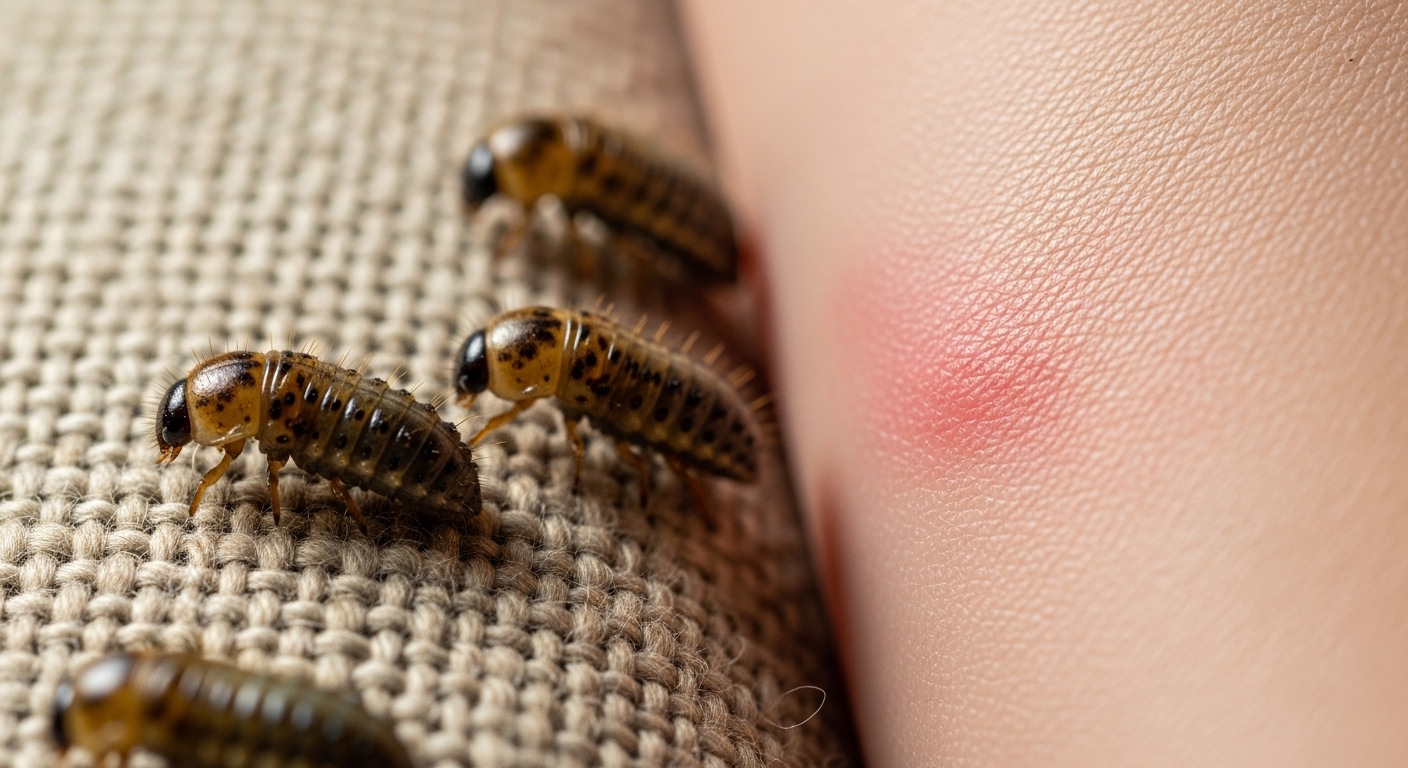
carpet beetle bites often get misunderstood, misdiagnosed, and completely ignored until the irritation becomes impossible to tolerate. Many people assume they are dealing with mosquito or bed bug bites, but the real culprit hides quietly in fabrics, carpets, and furniture. These tiny pests do not actually bite in the traditional sense, yet they still cause skin reactions that can feel just as uncomfortable and alarming.
What makes this issue more frustrating is how easily carpet beetles go unnoticed. Their larvae, not the adults, trigger allergic reactions that appear as itchy, red rashes. If you have unexplained skin irritation at home, especially near clothing or bedding, you may already be dealing with them. Understanding how these reactions occur and how to stop them quickly can save you from weeks of discomfort and confusion.
why carpet beetle bites feel real even when they are not bites
Carpet beetle bites create confusion because the irritation feels identical to actual insect bites. In reality, carpet beetles do not pierce the skin. The irritation comes from tiny, bristly hairs on their larvae. These hairs can trigger an allergic response when they come into contact with human skin.
The sensation can include itching, redness, and small raised bumps. Some people experience mild irritation, while others develop more intense rashes depending on their sensitivity. This reaction makes it easy to misidentify the cause, especially when symptoms appear overnight.
Unlike bed bugs, carpet beetles do not feed on blood. They feed on natural fibers such as wool, silk, leather, and even pet hair. However, their presence in living spaces puts their irritating hairs in direct contact with skin.
the surprising places carpet beetles hide in your home
Carpet beetles thrive in areas you rarely clean or inspect. Their larvae prefer dark, undisturbed spaces where natural fibers accumulate. This makes everyday items in your home the perfect breeding ground.
You will often find them in closets, under carpets, inside upholstered furniture, and around baseboards. They also hide in air vents, bedding, and even stored clothing. If you have old fabrics or rarely used items, the risk increases significantly.
Another overlooked source is pet-related debris. Pet hair and dander provide an ideal food source for larvae. This means homes with pets often experience more frequent infestations without realizing it.
how to recognize carpet beetle bites on your skin
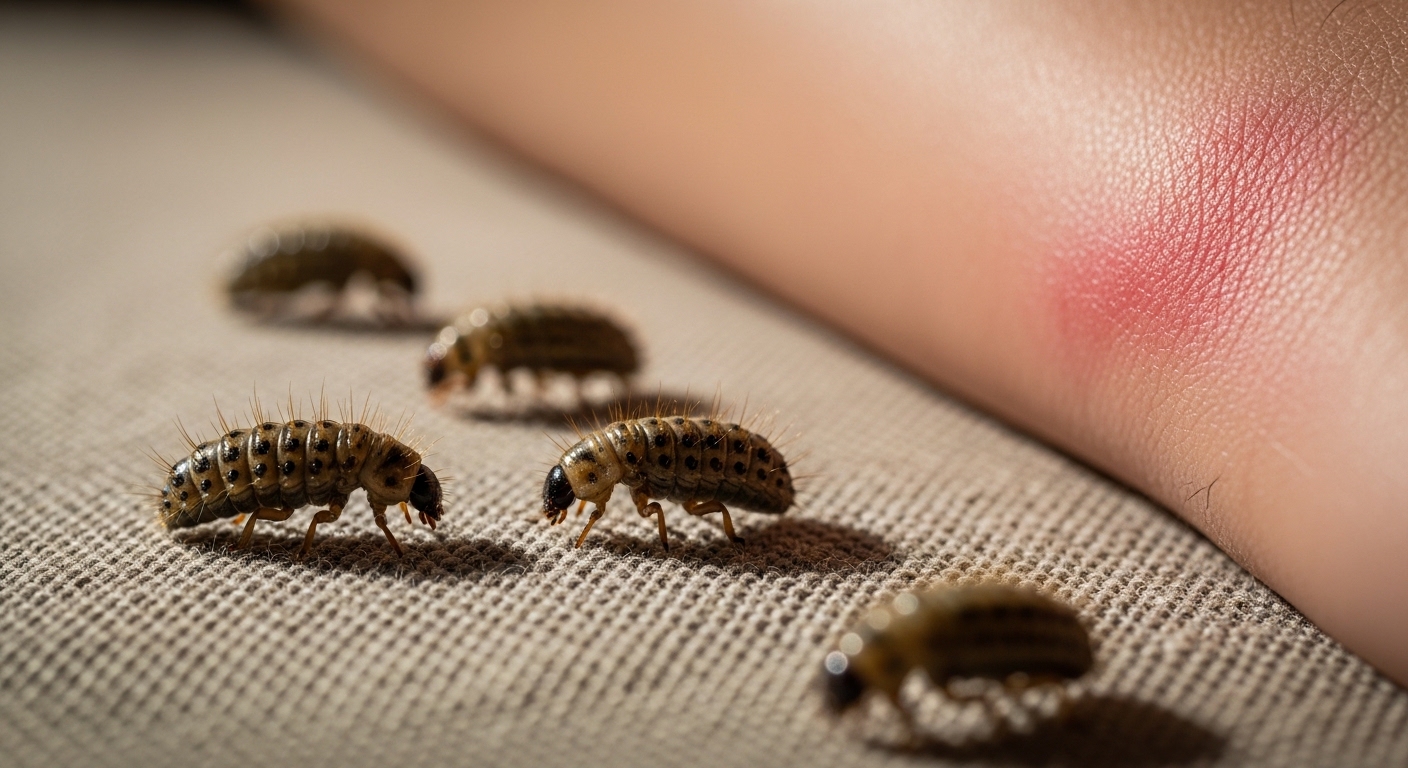
Carpet beetle bites usually appear as red, itchy patches rather than isolated puncture marks. The rash may spread over a larger area and often feels dry or slightly inflamed. Unlike mosquito bites, these reactions do not always have a clear center point.
Symptoms can include persistent itching, redness, small bumps, and sometimes a burning sensation. In more sensitive individuals, the reaction may resemble eczema or dermatitis. This often leads to misdiagnosis and ineffective treatments.
The location of the rash also provides clues. Carpet beetle reactions typically appear on areas that come into contact with fabrics, such as arms, neck, legs, and torso. If symptoms worsen after sleeping or wearing certain clothes, the cause likely lies in your environment.
carpet beetle bites vs bed bug bites the key differences
Many people panic and assume bed bugs when they notice unexplained bites. However, carpet beetle bites differ in several important ways that help you identify the real issue.
- Bed bug bites usually appear in lines or clusters with visible puncture marks
- Carpet beetle reactions look more like rashes or scattered irritation
- Bed bugs feed on blood, while carpet beetles feed on fabrics
- Carpet beetle irritation often spreads across a larger area
Understanding these differences helps you avoid unnecessary treatments. Misidentifying the problem can lead to wasted time and money on solutions that do not work.
what triggers severe reactions in some people
Not everyone reacts to carpet beetle larvae in the same way. The severity depends on your immune system and sensitivity to allergens. Some people barely notice the irritation, while others experience intense itching and discomfort.
Repeated exposure increases the likelihood of stronger reactions. If larvae continue to shed hairs in your living space, your body becomes more reactive over time. This explains why symptoms often worsen if the infestation remains untreated.
People with sensitive skin or preexisting allergies may experience more pronounced symptoms. In rare cases, the reaction can become severe enough to require medical attention.
immediate relief for carpet beetle bites at home
If you are already dealing with carpet beetle bites, you need quick relief to reduce discomfort. Simple home remedies can help calm the skin and prevent further irritation.
Start by washing the affected area with mild soap and cool water. This removes any remaining irritants from the skin. Applying a cold compress can reduce swelling and soothe itching.
You can also use over the counter anti itch creams or hydrocortisone for faster relief. Avoid scratching the affected area, as this can worsen the irritation and lead to infection.
If symptoms persist or become severe, consulting a healthcare professional is the best step forward.
how to eliminate carpet beetles before they spread
Getting rid of carpet beetles requires a thorough and consistent approach. Simply treating the symptoms will not solve the problem if the source remains in your home.
Start with deep cleaning. Vacuum carpets, rugs, furniture, and corners where debris collects. Pay special attention to hidden areas such as under furniture and inside closets.
Wash all fabrics, including bedding and clothing, in hot water. This helps eliminate larvae and eggs. For delicate items, consider professional cleaning to avoid damage.
Sealing cracks and cleaning air vents can prevent future infestations. Regular maintenance keeps your home less attractive to these pests.
prevention habits that actually work long term
Preventing carpet beetle bites is easier than dealing with an infestation. Consistent habits can significantly reduce the risk of larvae spreading in your home.
Keep your living space clean and free of dust and debris. Store seasonal clothing in airtight containers to protect them from pests. Regularly inspect fabrics for signs of damage or larvae activity.
Using natural repellents such as cedar or lavender can also discourage beetles from settling in your home. Maintaining airflow and sunlight exposure helps reduce damp, dark environments where larvae thrive.
why ignoring carpet beetle bites can make things worse
Many people dismiss carpet beetle bites as minor irritation, but ignoring the issue allows the infestation to grow. Over time, more larvae appear, increasing the number of irritants in your environment.
This leads to repeated exposure and stronger allergic reactions. The longer you wait, the more difficult it becomes to eliminate the problem completely. Early action saves time, effort, and discomfort.
Ignoring the signs also risks damage to your belongings. Carpet beetles can destroy fabrics, leaving holes in clothing, carpets, and upholstery.
when to seek professional pest control
While small infestations can be handled at home, larger problems require professional help. If you continue to experience carpet beetle bites despite cleaning efforts, the infestation may be widespread.
Professionals use targeted treatments that eliminate larvae and prevent recurrence. They can also identify hidden sources you might miss during regular cleaning.
Seeking help early ensures faster results and reduces the chances of long term damage to your home and health.
Conclusion
Carpet beetle bites may seem minor at first, but they quickly become a frustrating and persistent problem if ignored. The key lies in identifying the cause early and taking immediate action to eliminate it from your environment. By combining proper cleaning, targeted treatments, and consistent prevention habits, you can protect both your home and your comfort. Once you understand how these hidden pests operate, you regain full control and stop the cycle of irritation for good.
Frequently Asked Questions
do carpet beetles actually bite humans?
Carpet beetles do not bite humans. The irritation comes from the tiny hairs on their larvae, which trigger allergic reactions when they touch the skin.
how long do carpet beetle bites last?
The reaction usually lasts a few days to a week depending on your sensitivity. Proper treatment and removing the source can speed up recovery.
can carpet beetle bites spread across the body?
Yes, the rash can spread if you continue to come into contact with larvae hairs. Washing fabrics and cleaning your home helps prevent further exposure.
are carpet beetle bites dangerous?
They are not dangerous in most cases, but severe allergic reactions can occur in sensitive individuals. Persistent symptoms may require medical attention.
what kills carpet beetle larvae instantly?
Heat and thorough cleaning are highly effective. Washing fabrics in hot water and vacuuming regularly can eliminate larvae quickly.