
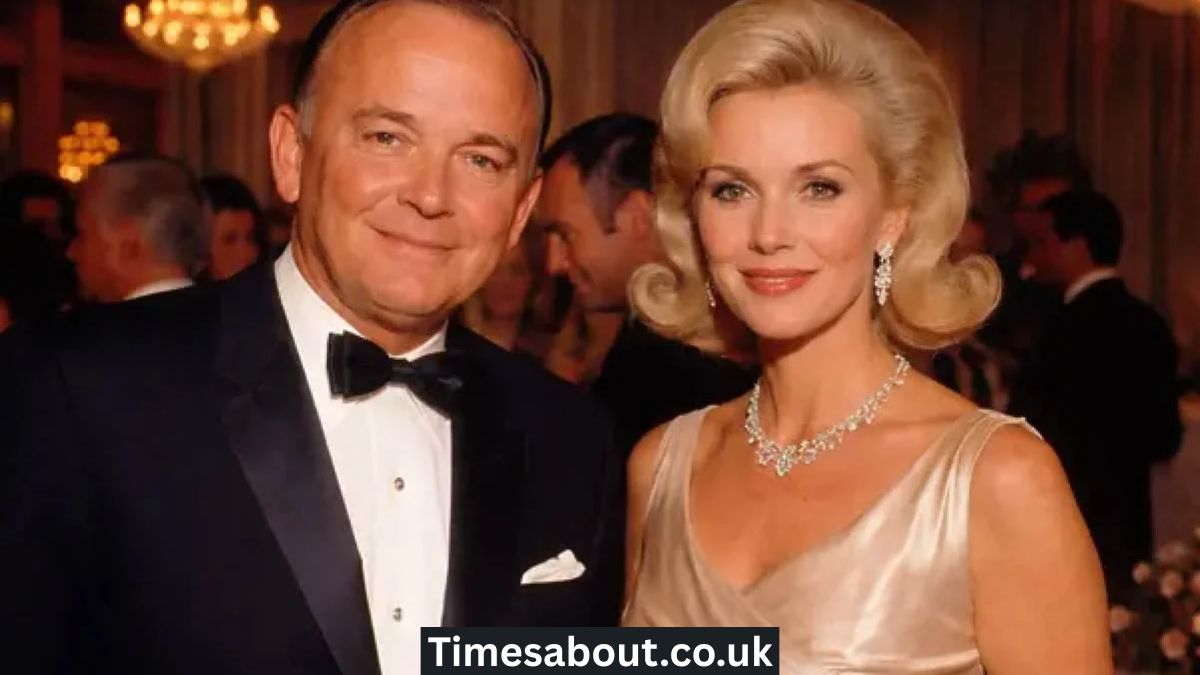
Jane Dobbins Green is one of those historical figures whose name surfaces primarily because of her connection to someone far more famous, yet her own story carries a quiet significance that deserves recognition on its own terms. She was an American woman who lived through nearly an entire century of dramatic change in the United States, from the early 1900s to the year 2000, witnessing two World Wars, the golden age of Hollywood, the rise of the fast food industry, and the transformation of modern American culture.
Most people who search for Jane Dobbins Green do so because of her marriage to Ray Kroc, the ambitious businessman who turned McDonald’s into a global fast food empire. She was his second wife, and their marriage lasted five years from 1963 to 1968. But there is considerably more to her biography than those five years suggest. Before her marriage to Kroc, she had already carved out a professional life of her own in Hollywood, working as a personal secretary to legendary actor John Wayne. After her divorce, she rebuilt her life quietly and with complete dignity, eventually remarrying in 1984 and living peacefully until her death in 2000.
Understanding who is Jane Dobbins Green means looking beyond the celebrity surname she briefly carried and recognizing a woman who made deliberate choices, valued privacy over publicity, and lived on her own terms throughout a long and eventful life.
Quick Bio: Jane Dobbins Green at a Glance
| Detail | Information |
|---|---|
| Full Name | Jane Dobbins Green |
| Date of Birth | November 22, 1911 |
| Place of Birth | Walla Walla, Washington, USA |
| Date of Death | August 7, 2000 |
| Age at Death | 88 years old |
| Nationality | American |
| Ethnicity | Caucasian |
| Hair Color | Blonde |
| Eye Color | Blue |
| Father | Warren David Dobbins |
| Mother | Grace Myrtle Duncan Frechette |
| Sibling | Eula Grace Dobbins (died as infant) |
| Known For | Second wife of Ray Kroc; secretary to John Wayne |
| First Marriage | Ray Kroc (1963 to 1968) |
| Second Marriage | Paul D. Whitney (1984 until her death) |
| Children | None (stepmother to Marilyn Kroc Barg) |
| Net Worth | Not publicly disclosed |
| Burial Place | Westwood Memorial Park, Los Angeles |
| Cause of Death | Natural causes |
Early Life and Family Background in Walla Walla
Jane Dobbins Green was born on November 22, 1911, in Walla Walla, a small city in the state of Washington, located in the southeastern corner of the Pacific Northwest. Walla Walla in the early twentieth century was a modest, community-centered town, far removed from the glamour of Hollywood or the intensity of big-city business life. It was a place shaped by agricultural tradition, strong family values, and the kind of quiet American life that rarely makes the headlines but forms the foundation of a person’s character.
Her father was Warren David Dobbins, and her mother was Grace Myrtle Duncan Frechette. Jane had one sibling, a sister named Eula Grace Dobbins, who tragically died in infancy. This early loss was one of several that would shape her understanding of life, resilience, and the importance of maintaining inner calm in the face of circumstances beyond one’s control.
Her parents’ marriage eventually ended in separation, and her mother later remarried Theodore Frechette in 1922, giving Jane a stepfather during her teenage years. Her father, Warren David Dobbins, passed away on July 25, 1946, at the age of 75. Her mother, Grace Myrtle Duncan Frechette, died on June 14, 1949, from a cerebral hemorrhage at the age of 65. Both parents were gone before Jane ever married Ray Kroc, meaning she navigated that chapter of her life without parental guidance or support from the people who raised her.
These early years in Walla Walla, shaped by family loss, economic hardship in Depression-era America, and the quiet culture of a small Northwestern town, laid the groundwork for the composed, private, and emotionally grounded woman Jane would become.
Growing Up in Early 20th Century America
To understand Jane Dobbins Green fully, it helps to understand the world she was born into. America in 1911 was a country in rapid transformation. The automobile industry was just beginning to reshape daily life. Women could not yet vote. The Great Depression was still nearly two decades away, but economic inequality was already deeply embedded in the social fabric of everyday American life. Growing up in this era meant growing up with a particular kind of resilience, because stability was never guaranteed and personal ambition had to be pursued carefully within the constraints of what society allowed women to do.
Jane came of age during the 1920s and 1930s, a period that included both the cultural explosion of the Jazz Age and the devastating economic collapse of the Great Depression. These decades shaped an entire generation of Americans to be practical, self-reliant, and cautious with both money and public expression. The women of Jane’s generation were among the first to enter the professional workforce in meaningful numbers, not through dramatic political acts but through the quiet accumulation of skills, reliability, and professional competence that employers gradually came to depend on.
By the time Jane reached her twenties and thirties, she had internalized the values of her generation. She was serious about her work, careful about her public image, and committed to living with a sense of dignity that did not depend on external validation. These qualities would later define her response to everything that happened in her life, including her high-profile marriage and her equally quiet departure from the spotlight.
Education and Personal Development
Details about Jane Dobbins Green’s formal education are not extensively documented in public records. This is not unusual for women of her era, particularly those from smaller towns and modest backgrounds. Access to higher education for women in the 1920s and 1930s was considerably more limited than it became in later decades, and many capable, intelligent women built their professional skills through work experience rather than university credentials.
What the available record does show is that Jane was clearly educated enough and capable enough to land a professional role of considerable responsibility at a relatively young age. Working as a personal secretary to one of Hollywood’s most famous actors required more than basic literacy. It required organizational ability, strong communication skills, professional discretion, the capacity to manage complex schedules, and the interpersonal intelligence to handle high-pressure situations with calm and competence.
Whether she completed formal secondary education in Walla Walla or received additional training in a professional or vocational context is not confirmed by available sources. What is clear is that she moved from her small hometown to Los Angeles, California, in pursuit of professional opportunity, and that she found it. That move itself speaks to a level of personal ambition and independent decision-making that is easy to overlook when the broader narrative focuses on the famous men in her life rather than on her own choices.
Career in Hollywood: Secretary to John Wayne
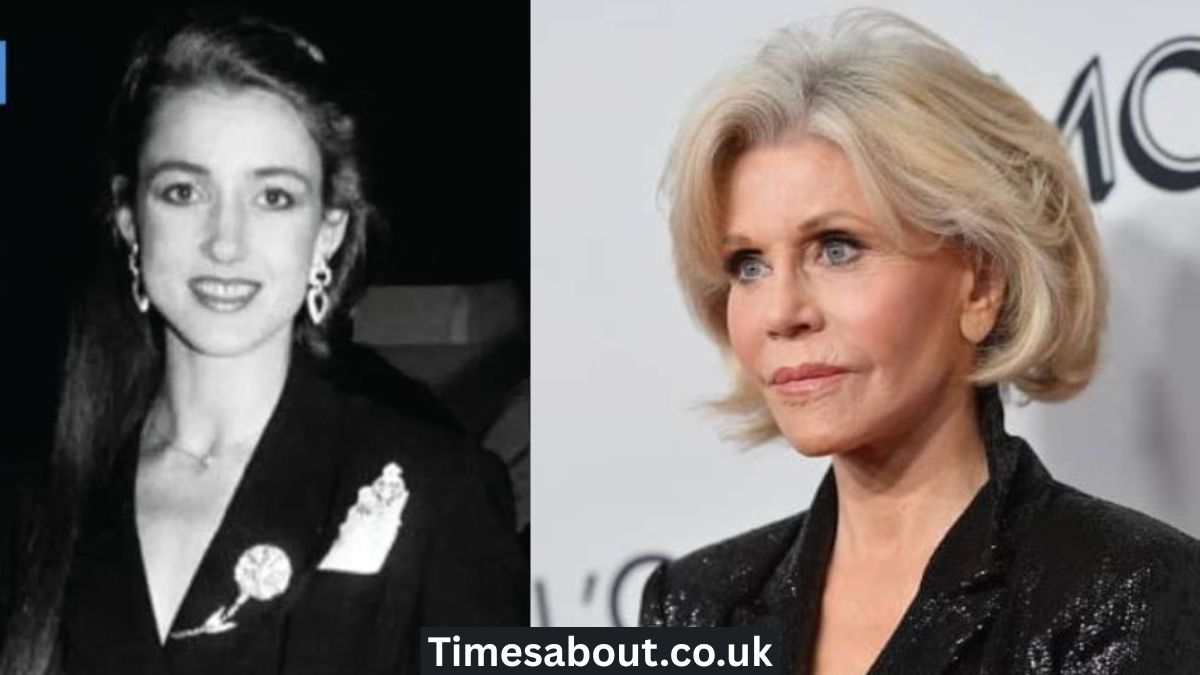
One of the most compelling and often overlooked chapters of Jane Dobbins Green’s life is her professional career in Hollywood. Before her name was ever linked to Ray Kroc or McDonald’s, she was already working in one of the most glamorous and demanding industries in the world. She served as the personal secretary to John Wayne, one of the most celebrated and powerful actors in the history of American cinema.
John Wayne, whose real name was Marion Robert Morrison, was at the peak of his fame during the 1940s and 1950s. His films defined a certain idea of American masculinity and heroism, and his star power was immense. Working as his secretary meant operating at the very center of Hollywood’s golden era. Jane managed correspondence, coordinated schedules, handled professional communications, and navigated the complex social world that surrounded a major film star.
This role demanded qualities that Jane clearly possessed in abundance. Discretion was perhaps the most important. A personal secretary to someone of John Wayne’s stature had access to private information, sensitive communications, and details of personal and professional life that could never be shared publicly. The fact that Jane held this position indicates that she was trusted completely, which is itself a powerful statement about her character and reliability.
Her time in Hollywood also gave her an intimate understanding of fame, public image, and the gap between how celebrities are perceived and who they actually are. This experience may well have influenced how she chose to handle her own later proximity to fame when she married Ray Kroc. Having seen the machinery of celebrity up close, she had no illusions about what public attention actually meant, and she wanted no part of it for herself.
Working for John Wayne also placed Jane in the social orbit of some of the most influential people in mid-century America. She was not merely a bystander to this world. She was a functioning professional within it, valued for her competence and her ability to keep things running smoothly behind the scenes.
Life Before Ray Kroc: An Independent Woman
It is important to establish clearly that Jane Dobbins Green had a full professional and personal life before Ray Kroc ever entered the picture. She was not a young woman looking for a wealthy husband when they met. By the time their paths crossed, she was already in her late forties or early fifties, with decades of professional experience behind her and a well-developed sense of who she was and what she valued.
She had moved across the country from her birthplace in Washington State to Los Angeles, established herself in a demanding professional role, and navigated the complex social world of Hollywood on her own terms. She had also experienced personal loss through the deaths of both parents, the loss of her infant sister, and the realities of family breakdown in her childhood home.
All of this shaped a woman who was fundamentally self-sufficient. She was not dependent on a famous name to give her identity meaning. She was not chasing celebrity or wealth. When she met Ray Kroc, she was a mature adult woman with her own history, her own values, and her own vision of what a good life looked like. That context matters enormously for understanding the marriage that followed and how she handled its end.
Who Is Ray Kroc? Understanding the Man She Married
To understand Jane Dobbins Green’s story in its full context, some understanding of Ray Kroc is essential. Raymond Albert Kroc was born on October 5, 1902, in Oak Park, Illinois. He spent the early part of his career in a series of sales roles, most notably as a salesman for paper cups and later for a commercial milkshake mixer called the Multimixer. He was a driven, restless, and intensely ambitious man who believed deeply in the power of systems, efficiency, and scale.
In 1954, Kroc visited a McDonald’s restaurant in San Bernardino, California, operated by brothers Richard and Maurice McDonald. He was immediately impressed by their assembly-line approach to food preparation and their ability to serve large numbers of customers quickly and consistently. He struck a deal with the brothers to franchise their concept nationally and eventually purchased the company outright.
Ray Kroc is widely described as the man who built McDonald’s into a global empire, though the McDonald brothers themselves originated the concept. This distinction is an important one, and it is the reason that some historical accounts refer to Kroc as the founder while others are more careful to credit the brothers with the original idea. By the time Kroc married Jane Dobbins Green in 1963, McDonald’s was already a major national chain and growing rapidly. He was a man at the height of his commercial power, intensely focused on expansion, and carrying the enormous personal and professional pressure that came with it.
His personal life, by contrast, was considerably more complicated. Before Jane, he had been married to his first wife, Ethel Fleming, for nearly 39 years. Their divorce was finalized in 1961, and Kroc paid a significant settlement. He then turned his attention to Jane Dobbins Green, and the two married in 1963.
How Jane Dobbins Green Met Ray Kroc
The circumstances of Jane Dobbins Green’s introduction to Ray Kroc are an interesting detail in an already interesting story. According to available accounts, Jane was working at the Criterion Restaurant in St. Paul, Minnesota, in 1957, where she played the organ. Ray Kroc, who was a regular presence in the restaurant industry at that time through his work with the Multimixer, was a customer there. The two met through this connection, years before they actually married.
Their relationship developed gradually over the late 1950s and into the early 1960s. Kroc’s first marriage to Ethel Fleming was still ongoing during this initial period, and the full nature of Kroc and Jane’s relationship before his divorce is not documented in detail. What is clear is that after Kroc’s divorce from Ethel was finalized in 1961, his relationship with Jane became more serious, and the two eventually married in February 1963.
The fact that they had known each other for several years before marrying suggests that their relationship was not impulsive. Jane had time to understand who Ray Kroc was, what his life looked like, and what marrying him would mean. She made an informed choice, and that choice says something about her own judgment and personal confidence.
Jane Dobbins Green First Husband: The Marriage to Ray Kroc
Jane Dobbins Green’s first husband was Ray Kroc, and their marriage formally began on February 23, 1963. At the time of their wedding, Jane was 51 years old and Ray was 60. Both were mature adults with full life histories behind them, entering into a relationship that must have seemed, at least initially, like a partnership between two people who understood the world and each other.
The marriage placed Jane in a social and public position that was very different from anything she had previously experienced. Ray Kroc was by 1963 one of the most talked-about businessmen in America. McDonald’s was expanding at an extraordinary pace, and Kroc was constantly in the news, attending industry events, meeting politicians, and managing the pressures of a rapidly scaling global enterprise. Being his wife meant inhabiting a world of considerable visibility.
This was not a world Jane was drawn to by temperament. She was, by every available account, a private person who valued calm, discretion, and genuine personal connection over public performance. The social demands of being married to someone of Kroc’s prominence would have been considerable, and navigating them required the same composure and self-possession that had defined her professional life in Hollywood.
The marriage lasted five years. There were no children from this union, though Jane did take on a stepmother role in relation to Kroc’s daughter from his first marriage, Marilyn Kroc Barg. The relationship between Jane and her stepdaughter is not documented in detail in publicly available sources.
What is documented is that the marriage was not without difficulties. The pressures of Kroc’s business life, the media attention, and ultimately Kroc’s developing relationship with another woman created conditions that could not sustain the marriage. By 1968, the divorce was finalized, and Jane Dobbins Green returned to private life.
Life as the Wife of the McDonald’s Founder
Living as the wife of Ray Kroc during the mid-1960s meant living alongside one of the most transformative business stories in American history. McDonald’s was growing from a successful national chain into a genuinely global operation during exactly the years that Jane and Ray were married. Kroc was consumed by this expansion in ways that left little room for the kind of quiet, private life that Jane preferred.
The social calendar of a person in Kroc’s position was demanding. Business dinners, industry events, public appearances, and media attention were constant features of the life he led. Jane navigated all of this with the composure that her years in Hollywood had developed in her. She was not someone who sought attention or used her position for personal gain. She attended what was required of her, maintained the dignity appropriate to her role, and kept her private thoughts and feelings largely to herself.
What life looked like inside the marriage is not documented with any precision. Neither Jane nor Ray ever gave detailed interviews about their relationship with each other. Ray Kroc’s memoir, Grinding It Out, focuses almost entirely on his business career and barely mentions Jane at all, which is telling in its own way. She existed at the edge of his narrative, not because she was insignificant as a person, but because his narrative was entirely about McDonald’s and the force of will required to build it.
For Jane, this period was simultaneously one of the most publicly prominent and personally isolating chapters of her life. She was close to the center of a historic business story, yet her own role in it was largely invisible. She was present, capable, and dignified throughout, but she was not a participant in the business itself in any documented way.
Why Did the Marriage End? The Divorce of 1968
The marriage between Jane Dobbins Green and Ray Kroc ended in divorce in 1968, five years after it began. The reason that has been most consistently cited across biographical accounts is that Ray Kroc had developed a serious romantic interest in another woman, Joan Smith, who was the wife of one of his McDonald’s franchisees at the time. Kroc’s feelings for Joan were intense and well-known within his inner circle, and they ultimately proved incompatible with his continued marriage to Jane.
Jane never made any public statements about the divorce. She did not give interviews. She did not speak to newspapers or appear on television to offer her version of events. She simply allowed the legal process to conclude and then moved on. This silence, maintained throughout the remainder of her life, is consistent with everything else known about her character. She was not someone who sought public sympathy or used personal pain as a vehicle for visibility.
Ray Kroc married Joan Smith, who became Joan Kroc, in 1969, the year after his divorce from Jane was finalized. Joan Kroc went on to become one of the most prominent philanthropists in American history, donating billions of dollars to causes including public radio, the Salvation Army, and nuclear disarmament. She is remembered as a major public figure in her own right.
Jane Dobbins Green, by contrast, disappeared entirely from public view after the divorce. There was no settlement publicly documented that would have given her a significant share of Kroc’s wealth. She left the marriage without the fortune, without the fame, and without the public platform that Joan Kroc would eventually build. She left with her dignity, and she appeared to consider that sufficient.
Life After Ray Kroc: Rebuilding in Privacy
The years immediately following Jane Dobbins Green’s divorce from Ray Kroc are among the least documented of her life. She did not pursue media opportunities. She did not write a book or participate in documentary projects about Kroc or McDonald’s. She did not attempt to leverage her former position as the wife of a famous businessman for any kind of personal or financial advantage.
She returned to the private life that had always suited her temperament better than the public one her marriage had required. She was in her mid-fifties at the time of the divorce, an age at which many women of her generation faced real social and economic vulnerability following the end of a significant marriage. Jane navigated this transition without any visible drama or distress, at least not any that ever reached the public record.
She lived in Los Angeles, California, a city she had known since her days working for John Wayne. The familiar geography of that city likely offered some comfort and continuity as she rebuilt the structures of her daily life outside of her marriage. What she did professionally during these years is not documented with any specificity. She had skills and experience, and she used them. Beyond that, the record is silent.
What is clear is that she maintained friendships, pursued her personal interests, and continued to live with the kind of quiet self-respect that had defined her throughout her adult life. Sixteen years passed between her divorce from Kroc in 1968 and her next marriage in 1984. Those sixteen years represent a substantial chapter of independent living that is almost entirely undocumented, which is itself a reflection of how completely and successfully she maintained her privacy.
Second Marriage to Paul D. Whitney
In 1984, Jane Dobbins Green married for the second time. Her second husband was Paul D. Whitney, a private individual who shared her preference for a quiet life away from public attention. This marriage was, by every available account, a calm and loving partnership built on mutual understanding and shared values.
Jane took on the name Jane E. Dobbins Whitney after this marriage, which further removed her from the public identity she had carried as Jane Dobbins Green, the former wife of Ray Kroc. This name change reflects how completely she was able to create a new chapter of her life, defined by who she actually was rather than by her former associations with famous men.
The details of Paul D. Whitney’s professional background and the specific circumstances of how the two met have not been documented in publicly available records. What is known is that their marriage lasted from 1984 until Jane’s death in 2000, a period of sixteen years during which they lived together quietly in Los Angeles. Paul Whitney outlived Jane by eight years, passing away in 2008. Both are buried together at Westwood Memorial Park in Los Angeles, which serves as a permanent symbol of the life they built together in their final decades.
The second marriage also confirmed something important about Jane Dobbins Green as a person. She was not someone who was defined by her connection to Ray Kroc. She moved forward, found love again, and built a genuinely satisfying life on her own terms. That capacity for renewal and personal peace speaks well of her emotional intelligence and her fundamental resilience.
Jane Dobbins Green the Founder Connection: Her Role in Kroc’s Story
There is an important distinction worth addressing clearly. Jane Dobbins Green the founder connection refers specifically to her relationship with Ray Kroc, who is commonly called the founder of McDonald’s in popular culture. In precise historical terms, McDonald’s was founded by brothers Richard and Maurice McDonald in 1940. Kroc was the businessman who acquired the franchise rights, built the national and international expansion of the chain, and eventually purchased the company outright from the brothers. He is therefore more accurately described as the man who scaled McDonald’s into a global empire, though the title of founder is widely attributed to him in popular accounts.
Jane’s connection to this story is through her marriage to Kroc during one of the most significant periods of McDonald’s growth. The mid-1960s were transformative years for the chain, with expansion into new markets, the development of iconic menu items, and the establishment of the infrastructure that would support global franchising. Jane was Kroc’s wife through all of this, living alongside the man who was driving this transformation, even if she had no direct involvement in the business decisions themselves.
Her role in Kroc’s life during this period is not one that comes through in business histories or corporate narratives. She is mentioned briefly in most accounts, acknowledged as the second wife, and then set aside in favor of the more dramatic story of his third marriage to Joan. But her presence in his life during those years was real, and her decision to maintain dignity and privacy through the marriage and its end reflects a standard of personal character that deserves acknowledgment.
Understanding Jane Dobbins Green the founder connection means recognizing that she was not a passive figure simply attached to a famous name. She was an adult woman who made a choice to marry a man at a specific moment in his life, navigated the complexity of that life with composure, and then chose something different when the marriage ended. Her story adds a human dimension to the McDonald’s narrative that the business history books tend to leave out.
Net Worth and Financial Life
Jane Dobbins Green’s net worth was never publicly disclosed during her lifetime or after her death. There are no verified financial records or official statements that confirm what she was worth at any point in her life. This is consistent with how she approached everything else about her personal life, with complete privacy and without any desire for public scrutiny.
Some biographical sources have suggested figures around $100,000 at the time of her death, though these estimates are entirely speculative and lack any documented basis. What can be said with reasonable confidence is that she did not receive a substantial financial settlement from her divorce from Ray Kroc. There is no public record of any significant property division or alimony arrangement that would have given her a meaningful share of his considerable wealth.
Ray Kroc’s own net worth at the time of his death in 1984 was estimated at approximately $600 million, a figure that would be equivalent to well over a billion dollars in today’s terms. The contrast between that fortune and Jane’s apparently modest financial circumstances after their divorce is striking. She left the marriage with far less than she might have claimed, either because she chose not to pursue an aggressive legal settlement or because the terms of the divorce simply did not favor her financially.
What her financial life looked like during the sixteen years between her divorce and her second marriage in 1984 is not documented. She clearly lived without great public wealth, but she also appeared to live without notable financial hardship. Her lifestyle, as far as can be determined from available records, was modest, private, and self-sufficient. She was not someone who measured personal success in financial terms, and the absence of a documented fortune does not diminish the quality of the life she built.
Death and Legacy of Jane Dobbins Green
Jane Dobbins Green died on August 7, 2000, in Los Angeles, California. She was 88 years old at the time of her death, having lived through nearly the entire twentieth century. The cause of death was natural, consistent with her advanced age and a long life. She was buried at Westwood Memorial Park in Los Angeles, where she rests alongside her second husband, Paul D. Whitney, who was laid to rest there when he died in 2008.
Her death attracted very little public attention. There was no major media coverage, no tribute articles in the publications that had briefly noted her existence during her marriage to Kroc, no posthumous recognition of her long life or the quiet dignity with which she had lived it. She died as she had lived for the final three decades of her life: privately, away from public notice, and on her own terms.
Her legacy is not the kind that gets measured in monuments or institutional recognition. She did not fund a library, endow a university chair, or establish a charitable foundation in the way that Joan Kroc famously did with the fortune she inherited. Jane’s legacy is more personal and more subtle. It is the legacy of a woman who demonstrated that a life of integrity, privacy, and personal dignity is possible even when the world is pushing toward spectacle and self-promotion.
She was connected to two of the most famous men in mid-twentieth-century American culture, John Wayne and Ray Kroc, yet she never leveraged those connections for personal advantage. She held information about both men’s private lives that could have been sold to the press, and she never sold it. She endured a high-profile divorce from one of America’s wealthiest men and never commented on it publicly. These choices, maintained over decades and across the entire remaining arc of her life, represent a form of character that is genuinely rare.
Public Memory and Historical Importance
The public memory of Jane Dobbins Green is thin, which is exactly how she would have wanted it. She has no Wikipedia page of her own, appearing only as a brief mention in Ray Kroc’s biographical entries. She left no memoir, no recorded interviews, and no documented personal correspondence that has entered the public domain. She is remembered primarily because people researching Ray Kroc or McDonald’s history encounter her name in passing and become curious about who she was.
That curiosity is legitimate and worth satisfying. Her story adds important texture to the broader narrative of Ray Kroc’s life and, by extension, to the story of McDonald’s itself. Every major figure in history is shaped in part by the personal relationships they navigate, and the five years Kroc spent married to Jane were years of enormous professional expansion and personal complexity. Understanding that period means understanding something about Jane as well.
More broadly, her story is historically interesting because it reflects the experience of a particular kind of American woman, one who lived through the twentieth century with intelligence, competence, and quiet strength, without ever seeking recognition for any of it. Women like Jane Dobbins Green are often the invisible foundation beneath the famous stories that history chooses to remember. Recognizing her is a small but meaningful act of historical balance.
Conclusion
Jane Dobbins Green was not a woman who sought the spotlight. She did not build a media persona, write her own story, or use her proximity to powerful men as a launching pad for personal ambition. She was born in a small town in Washington State in 1911, built a quiet but genuinely impressive professional life in Hollywood, married one of the most consequential businessmen in American history, endured the end of that marriage with complete dignity, and then rebuilt a peaceful private life that lasted until her death at 88.
Her connection to Ray Kroc, jane dobbins green first husband, places her inside one of the most famous business stories of the twentieth century. Her work for John Wayne places her at the center of Hollywood’s golden era. Yet she chose to stand at the edges of both worlds, contributing without demanding recognition, present without performing.
Jane Dobbins Green the founder connection reminds us that the great American business stories always have human dimensions that the corporate histories leave out. She was one of those human dimensions, a real woman who lived a real life alongside the mythology of McDonald’s, and who chose, consistently and deliberately, to be more than a footnote without ever demanding to be a headline.
Her story, told fully and honestly, is a story about a particular kind of strength. Not the strength that builds empires or commands stages, but the strength that maintains dignity when dignity is costly, that chooses peace over attention, and that lives with integrity across an entire century of change. That is a legacy worth remembering.
Frequently Asked Questions
Q1. Who was Jane Dobbins Green?
Jane Dobbins Green was an American woman born on November 22, 1911, in Walla Walla, Washington. She is best known as the second wife of Ray Kroc, the businessman who built McDonald’s into a global fast food empire. Before her marriage to Kroc, she worked as a personal secretary to Hollywood actor John Wayne. She died on August 7, 2000, at the age of 88.
Q2. Who was Jane Dobbins Green’s first husband?
Jane Dobbins Green’s first husband was Ray Kroc, whom she married on February 23, 1963. Their marriage lasted five years before ending in divorce in 1968. Ray Kroc is widely known as the man who transformed McDonald’s from a regional chain into one of the world’s most recognized fast food brands.
Q3. Why did Jane Dobbins Green and Ray Kroc divorce?
The most consistently cited reason for their divorce is that Ray Kroc had developed a serious romantic interest in Joan Smith, who later became his third wife, Joan Kroc. The marriage ended in 1968, and Kroc married Joan the following year. Jane never made any public statements about the reasons for the divorce.
Q4. Did Jane Dobbins Green have children?
Jane Dobbins Green did not have any biological children. Her marriage to Ray Kroc was childless, though she did serve as stepmother to his daughter from his first marriage, Marilyn Kroc Barg. There are no records of children from her later marriage to Paul D. Whitney either.
Q5. What was Jane Dobbins Green’s connection to the McDonald’s founder?
Jane Dobbins Green was married to Ray Kroc, who is commonly referred to as the founder of McDonald’s, from 1963 to 1968. This places her inside one of the most significant chapters of American business history. She had no direct involvement in the McDonald’s business, but she was Kroc’s wife during a period of enormous expansion for the company.